
There are clothes you wear just to get through the day, and then there are garments that quietly carry the weight of memory. The kurta pyjama is definitely the second kind. It’s stitched into the very fabric of our lives—found in grainy family photographs, felt in the cool air of a festival morning, and seen on temple steps warmed by the afternoon sun.
To really understand the kurta pyjama is to understand how a piece of clothing can travel through centuries, crossing borders and empires, only to feel completely at home in a modern wardrobe today. Let’s take a thoughtful walk through its story.
What is the history of the kurta pyjama?
The kurta pyjama is one of the oldest surviving forms of South Asian attire, and its design was essentially a conversation between human culture and the environment. Long before it was a fashion statement, it was a practical necessity. You can see tunic-like garments in ancient Indian sculptures and texts, worn by everyone from royal courtiers to humble artisans.
The design was simple because it had to be: loose silhouettes to let the skin breathe in the heat, straight cuts for easy movement, and natural fibers to stay comfortable. Over time, this “everyday” outfit became more refined. Tailoring got sharper and fabrics grew richer, but the soul of the garment stayed the same.
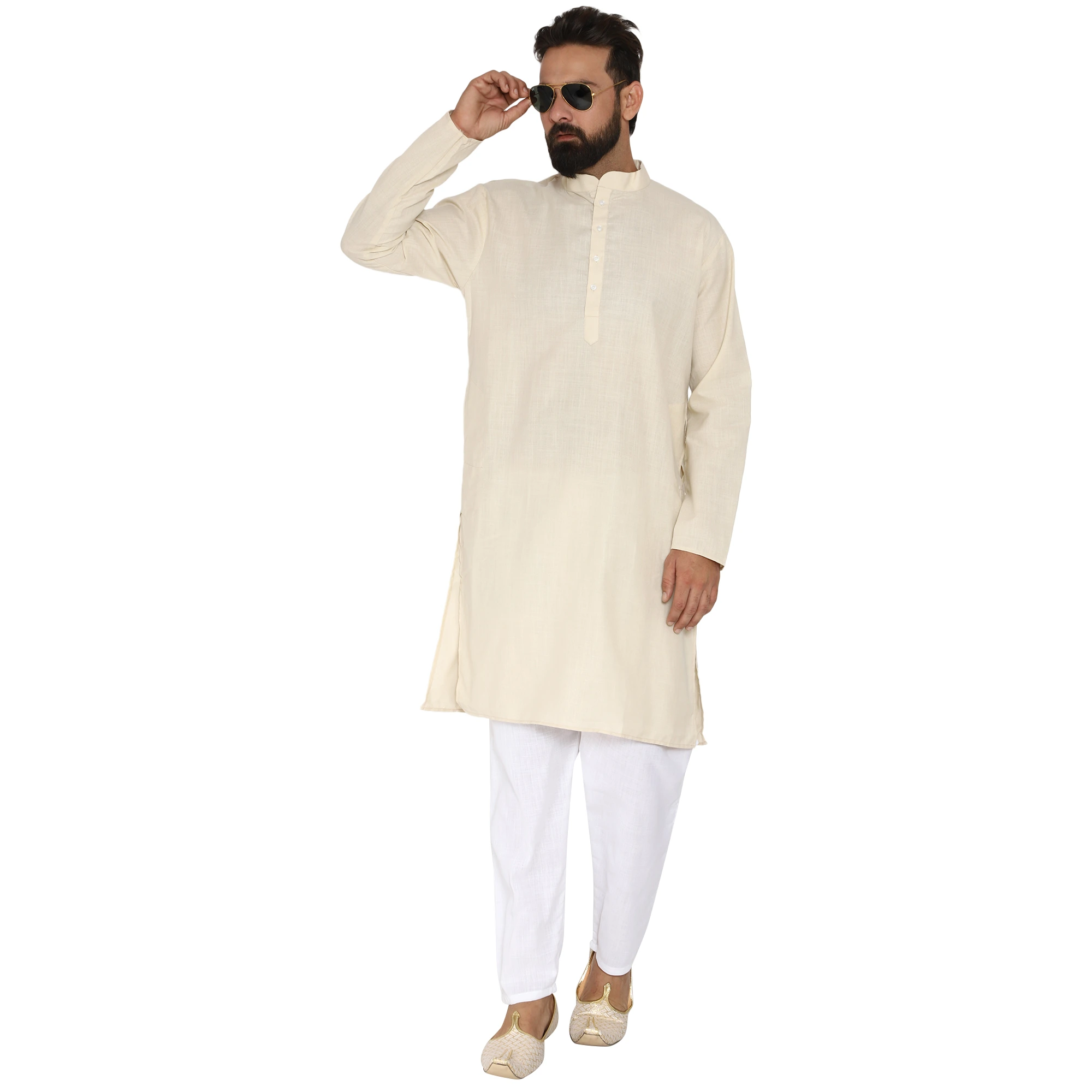
A classic set, like this understated Mag Men’s Cotton Cream Kurta White Pajama Set For Men, captures that original spirit perfectly—simplicity that has been polished by time.
Where did the kurta pyjama originate?
It’s hard to point to a single “birthplace” because the kurta pyjama is a traveler. It grew across the entire Indian subcontinent, absorbing influences from Persian trade routes and cultural exchanges during the medieval period.
Northern India played a huge role in its evolution. With its brutal summers and biting winters, people needed something versatile. Loose cotton allowed air to circulate in July, while heavier layers could be added in December. Over the years, every region added its own “flavor”—different lengths in the north, unique collar shapes in the west, and varied stitching techniques throughout the south.
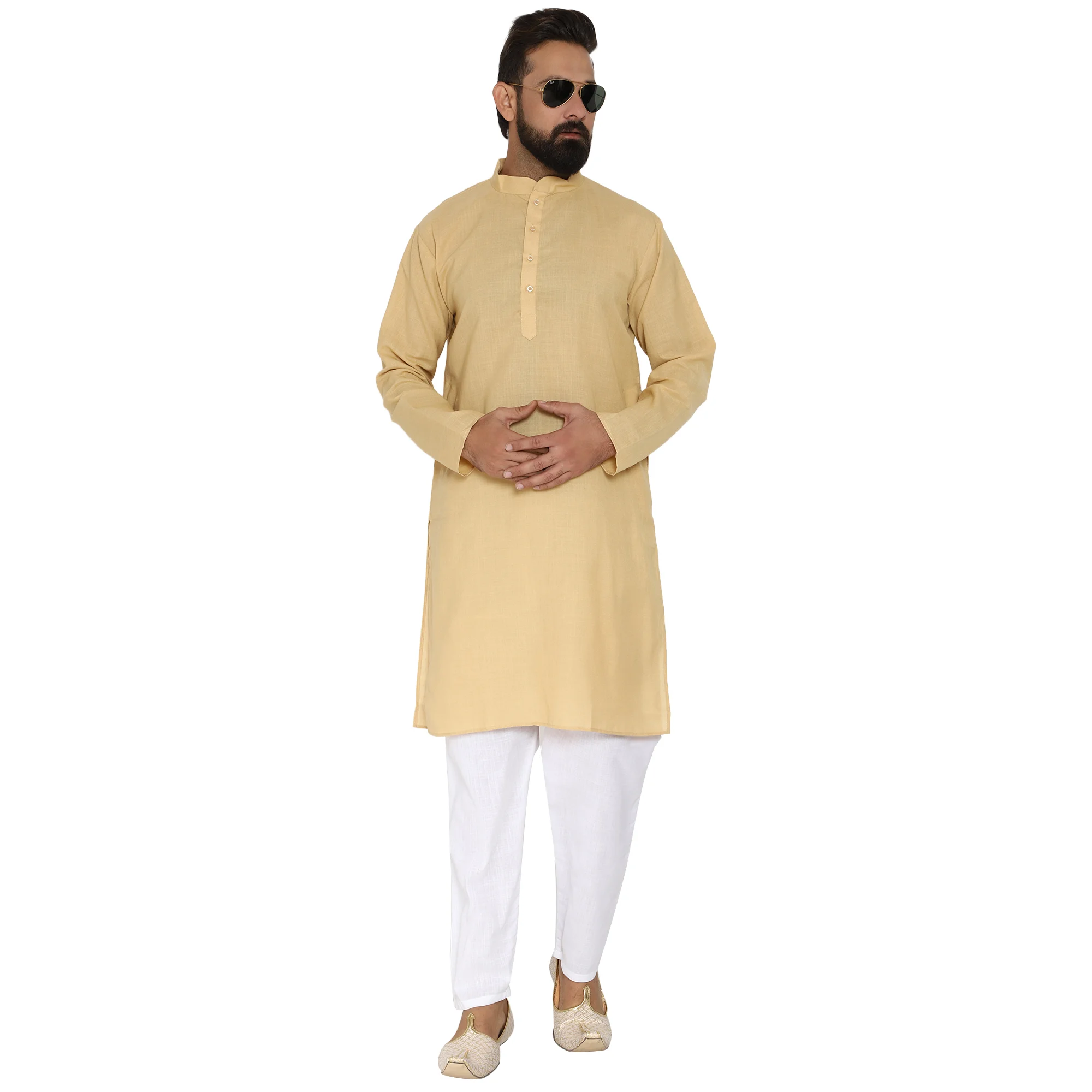
The soft, golden tones of this Mag Men’s Cotton Gold Kurta White Pajama Set For Men always remind me of the warmth and regal restraint that used to travel along those ancient trade routes.
Is the kurta pyjama Mughal or Indian in origin?
This is a question with a very beautiful, layered answer. The kurta itself is deeply rooted in ancient Indian tradition, predating the Mughal era by centuries. However, the Mughals were the ones who gave it that extra bit of “polish.”
They introduced more sophisticated tailoring, longer hemlines, and luxurious fabrics like silk and fine muslin. They were also the ones who popularised pairing the kurta specifically with pyjamas rather than looser, wrapped lower garments. Think of it as a collaboration across time: Indian roots meeting Mughal refinement.
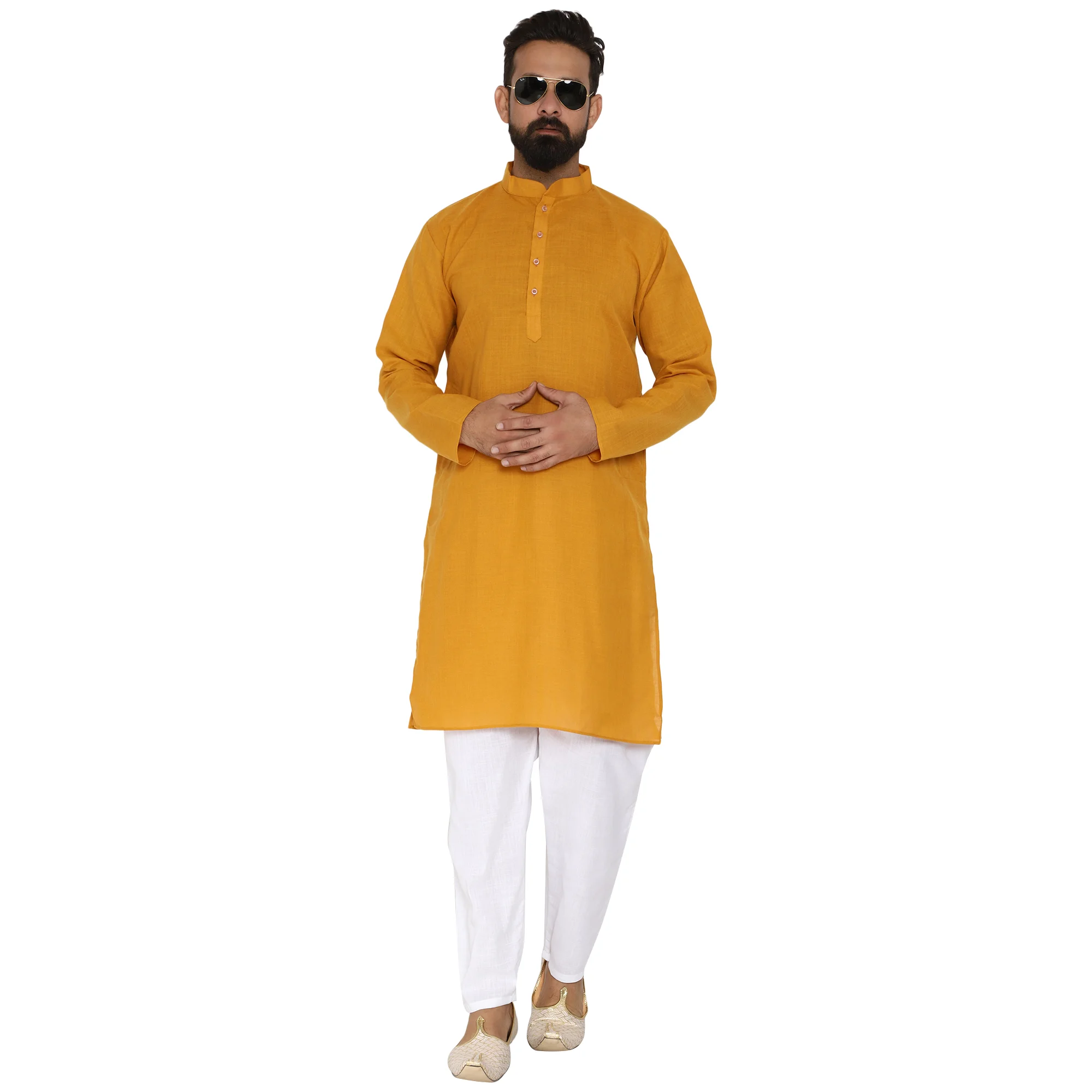
Shades like mustard were often favored in courtly settings for their richness. You can still feel that historical resonance in a piece like this Mag Men’s Cotton Mustard Kurta White Pajama Set For Men, which balances that old-world dignity with a very clean, modern fit.
How did it evolve over time?
The most remarkable part of the kurta pyjama’s journey is how it moved from royal courts to the everyday closets of the common man. It became a “democratic” garment—worn by poets, farmers, activists, and businessmen alike.
After independence, it became a powerful symbol of cultural identity and self-reliance. While designers today experiment with asymmetrical cuts and bold new colors, the core remains untouched: it’s about dignity, comfort, and an incredible ability to adapt to the person wearing it.
What fabrics were traditionally used?
Fabric is the heartbeat of a good kurta. Historically, cotton was the undisputed king—handspun, breathable, and incredibly kind to the skin in a tropical climate. There are legends of muslin so fine it could be pulled through a wedding ring, used to clothe royalty.
When you run your hand over a well-made cotton kurta today, you notice it immediately: the softness, the way it falls without clinging, and the way it keeps you cool. That comfort isn’t a happy accident; it’s centuries of wisdom stitched into the cloth. At Royal Mags, we try to honor that legacy by focusing on cotton sets that feel as good as they look.
Why is the kurta pyjama still so popular today?
I think it’s because the kurta pyjama asks absolutely nothing of you, yet it gives you everything. It doesn’t pinch, it doesn’t restrict, and it doesn’t demand you act a certain way. It just belongs—whether you’re at a morning puja, a loud festive dinner, or just having a quiet tea at home.
In a world of “fast fashion” that changes every week, the kurta pyjama remains grounded and honest. It’s a piece of history that you can actually live in.

